
Mental Fitness
Important insights from Hoss & Hopf Podcast: Dr. Nehls explains how you can prevent Alzheimer's. Learn everything about habits for a strong brain.
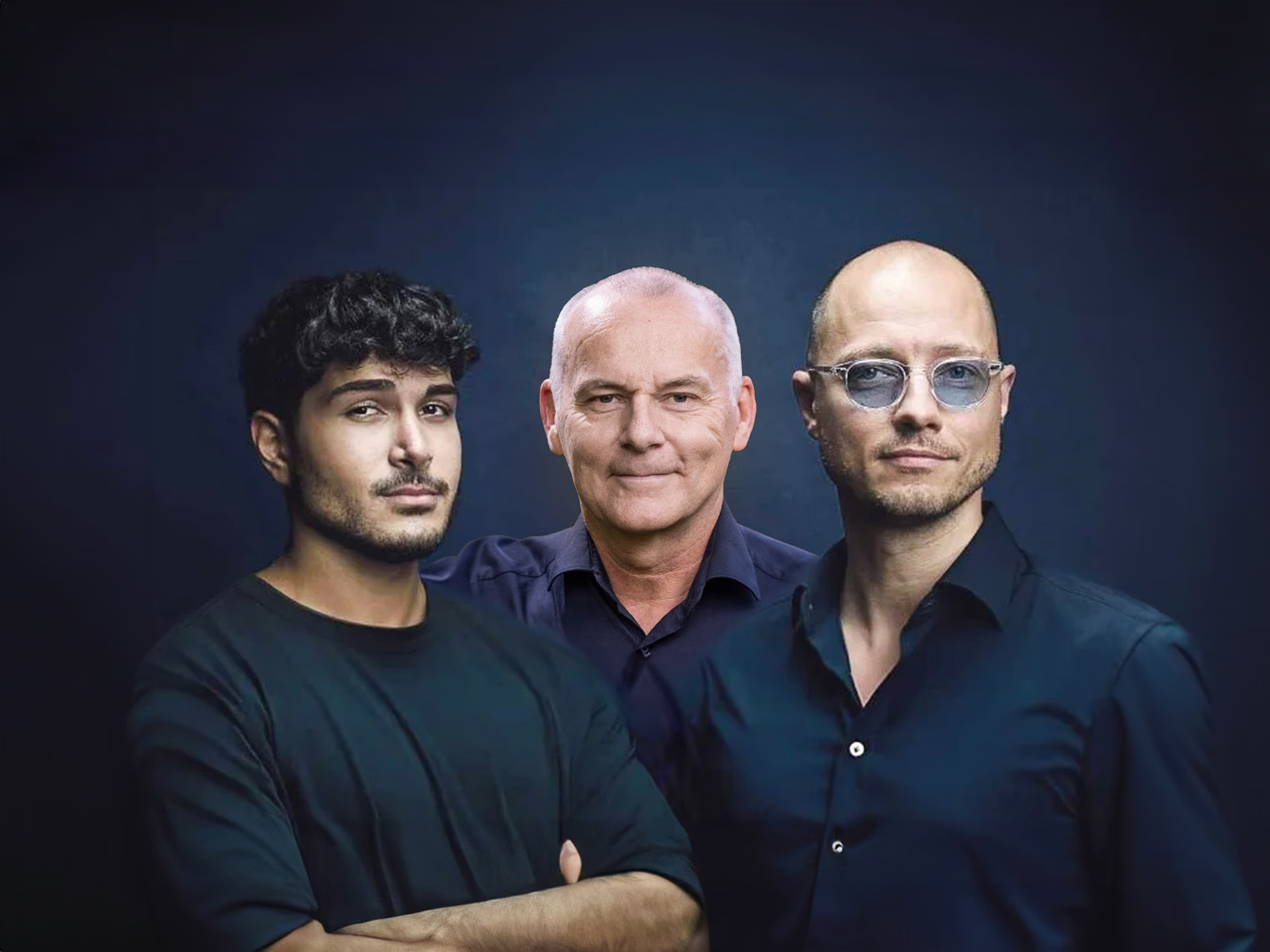
Hoss & Hopf in conversation with Dr. Nehls. A summary.
In the latest episode of the Hoss & Hopf Podcast, Dr. Michael Nehls was a guest. As an expert in molecular genetics and immunology, he spoke about cognitive health, Alzheimer's and the influence of lifestyle and technology on our brain.
The conversation was full of valuable information, which we have summarised for you in this post.
Alzheimer's
«Not an age-related disease, but lifestyle-related»
Alzheimer's is often viewed as an inevitable consequence of ageing, but this is a misconception. Dr. Michael Nehls explains that Alzheimer's is strongly influenced by lifestyle – so it's not just about getting older. The hippocampus is particularly important, the part of your brain responsible for memory and orientation. In the early stages of the disease, this area is affected, and the good news is: with the right measures, the process can be halted or even reversed.
Another point that Dr. Nehls emphasises is that Alzheimer's doesn't necessarily have anything to do with age. In his book "The Alzheimer's Lie", he debunks the myth that ageing automatically leads to this disease. It is rather the modern, unhealthy lifestyle – stress, poor nutrition and especially the excessive consumption of social media – that weakens the brain and paves the way for Alzheimer's.
This means
You can actively do something against cognitive decline.
The keys to this?
- Exercise and healthy nutrition!
- Regular physical activity can increase the volume of the hippocampus by up to 2% annually.
Hippocampus
The memory centre of your brain
The hippocampus plays a central role in your memory and cognitive health. Dr. Nehls describes it as the "diary" of your brain – this is where your autobiographical memories are stored. At the same time, it is also important for stress management and emotional resilience.
A fascinating detail: the hippocampus can actually form new nerve cells, even in adulthood. This process is called neurogenesis and occurs almost exclusively in the hippocampus. With the right combination of exercise, mental challenges and healthy nutrition, you can actively promote the growth of these new nerve cells and thus keep your brain fit.
But here too it becomes clear: stress, poor nutrition and constant consumption of social media work against this. These factors inhibit the growth of the hippocampus and accelerate cognitive decline in the long term. Previously, Alzheimer's was a rare disease, today it is one of the most common causes of death in Europe – and this, according to Dr. Nehls, is mainly due to the modern lifestyle.
Technology and social media
A danger to your brain?
Our modern way of life, especially the excessive consumption of social media, affects the health of our brain more than you might think. Platforms like TikTok and Instagram flood our brain with constant, often trivial information. The result? A real overload that prevents our brain from thinking deeply and reflectively. Instead, it remains in a mode that only reacts to new stimuli.
Dr. Nehls explains that this constant flow of information stimulates the release of dopamine – the happiness hormone responsible for "reward" in the brain. Every time you scroll through the feeds, your brain gets a small dopamine boost. This leads to you seeking more and more stimuli whilst losing the ability to engage with deeper, more complex thoughts.
He also talks about the concepts of System 1 and System 2, originally described by psychologist Daniel Kahneman.
- System 1 is fast, automatic thinking – perfect for simple, emotional reactions.
- System 2, on the other hand, represents slow, reflective thinking that requires a lot of energy.
Through constant consumption of social media, many people get stuck in System 1. The deep, reflective thinking of System 2 is neglected, which in the long term leads to superficial, impulsive behaviour. Dr. Nehls warns that this could put our society into a kind of "zombie mode" in which emotions and stimuli dominate whilst analytical thinking becomes increasingly rare.
Lithium, Vitamin D and Omega-3
Important nutrients for your brain.
Dr. Nehls discusses in detail the importance of certain nutrients for the health of your brain in the podcast. He particularly emphasises the role of lithium, vitamin D and omega-3 fatty acids.
- Lithium: The underestimated helper for your brain
Lithium is a trace element that is absorbed in very small amounts through food and has a protective effect on your brain. According to Dr. Nehls, micro-dosed lithium can slow cognitive decline and even prevent the progression of Alzheimer's. Even minimal amounts, such as those found in spinach or mussels, are sufficient.
Interestingly, a study shows that just 1 mg of lithium per day can positively influence cognitive health. In regions where the soil is rich in lithium, such as in the African Rift Valley, human nutrition was formerly naturally rich in this valuable nutrient. Mussels in particular are considered an excellent source, as they filter lithium from seawater. - Vitamin D: The sunshine vitamin for your brain
Vitamin D is not only important for bone health – it also plays a crucial role for your brain. In northern countries where less sunlight is available, many people have a vitamin D deficiency, which can accelerate cognitive decline. An adequate supply of vitamin D, whether through sun exposure or dietary supplements, is therefore essential to reduce the risk of Alzheimer's. - Fish oil and omega-3 fatty acids: Nutrition for nerve cells
Omega-3 fatty acids, which are mainly contained in fish oil, are among the most important building blocks for the health of your nerve cells. They help reduce inflammation in the brain and promote brain function. Studies prove that regular consumption of omega-3 fatty acids, such as those found in fatty fish like salmon, herring and mackerel, can reduce the risk of Alzheimer's.
Mental energy
Why you shouldn't waste your brain
Dr. Nehls emphasises how important it is to use your mental energy consciously and not waste it on useless activities like excessive social media consumption. Mental energy is limited, and through constant distraction it becomes exhausted before your brain can engage in profound thought processes.
Loss of mental energy:
Through constant "swiping" on social media, your brain remains trapped in System 1, the fast and impulsive thinking. This type of thinking is useful for immediate, simple decisions, but it lacks reflection and depth. The brain becomes overwhelmed by a flood of stimuli and doesn't switch to System 2, which is responsible for slow and concentrated thinking. If you waste your mental energy through too much superficial entertainment, you have hardly any strength left for really important and profound decisions.Stress and brain overload:
Another factor that negatively affects your mental energy is chronic stress. Particularly through comparison on social media or through cyberbullying, great pressure arises. This stress causes long-term inflammation in the brain, which inhibits the growth of the hippocampus and increases susceptibility to neurodegenerative diseases like Alzheimer's.
What you can do
Tips for a strong brain
Dr. Nehls gives practical tips in the podcast on how you can actively strengthen your cognitive health. These pieces of advice are easy to implement and help keep your brain fit in the long term.
Regular exercise:
Exercise is one of the best ways to slow cognitive decline. Studies show that physical activity can increase the volume of the hippocampus. This means: even daily walking, light jogging or yoga can give your brain a real boost.Healthy nutrition:
Your diet has a great influence on the health of your brain. A balanced diet that is rich in omega-3 fatty acids (e.g. through fatty fish like salmon), vitamin D and lithium helps protect and regenerate your brain. Also supplement your diet with fresh vegetables, nuts and wholegrain products – your brain will thank you!Mental challenges:
To keep your brain active, you should challenge it regularly. Reading, learning or engaging with demanding topics promote the growth of new nerve cells in the hippocampus. Social interactions and discussions about complex topics also help preserve your mental fitness.Limit social media:
Consciously reduce the time you spend on social media to conserve your mental energy. Instead of constantly scrolling through feeds, use your time for activities that really benefit you – whether it's a good book, a conversation or simply time in nature. Your brain needs breaks from constant stimuli to work effectively.
Societal impacts
Cognitive health and democracy
Dr. Nehls also speaks about the broader societal consequences of cognitive decline, which he sees in connection with our modern lifestyle. A healthy society needs people who are able to make sound and rational decisions. But precisely this ability is weakened by the constant consumption of social media and the resulting mental overload.
Populism and cognitive weakness:
When people's cognitive abilities decline, they increasingly react emotionally and impulsively to political messages instead of acting rationally. According to Dr. Nehls, this development promotes populism, as people respond to simple, emotional stimuli without thinking more deeply. This is dangerous for democracy, which depends on informed and considered decisions by citizens.Loss of thinking power:
The more people remain in the fast, superficial thought patterns of System 1, the harder it becomes for them to activate the complex and reflective thought processes of System 2. This could lead in the long term to a society in which profound thinking becomes a rarity.
Personal reflections
How small steps protect your brain
Dr. Nehls and the podcast hosts, Philip Hopf and Kiarash Hossainpour, also share personal experiences and insights. Dr. Nehls emphasises that his own mental health has always been particularly important to him. Out of fear of cognitive decline, he has consciously avoided drugs and instead focused on a healthy lifestyle. His experience shows: with the right measures, you can actively protect your brain.
Philip and Kiara also reflect on their handling of social media and admit that they sometimes catch themselves spending too much time on these platforms. They emphasise how important it is to become aware of these dangers and take measures to avoid overloading the brain.
Conclusion
You have power over your cognitive health
The conversation with Dr. Nehls makes clear that Alzheimer's and dementia are not inevitable consequences of ageing. They are strongly connected to the lifestyle you lead. With the right measures – such as exercise, healthy nutrition, taking lithium, vitamin D and omega-3 fatty acids, as well as conscious handling of social media – you can actively protect your brain and prevent cognitive decline. It's in your hands to keep your brain fit!
Who is Dr. Michael Nehls?
Dr. Michael Nehls is a qualified doctor and habilitated molecular geneticist who works intensively in the fields of immunology, genetic research and cognitive health.
He raised an important voice for the human immune system during the Corona pandemic and is considered an expert on the connection between lifestyle and neurodegenerative diseases like Alzheimer's. In his books, including "The Alzheimer's Lie" and "The Lithium Conspiracy", he shows how exercise, nutrition and certain nutrients can protect and even regenerate our brain.
Sources:
- Website and YouTube channel of Dr. Michael Nehls: michael-nehls.de / YouTube Channel
- Book: "The Indoctrinated Brain": michael-nehls.de
- Book: "Herd Health" (Vitamin D and Covid): michael-nehls.de
- Book: "The Lithium Conspiracy – The Forbidden Key to Mental Health": michael-nehls.de
- Video about the hardest bike race in the world (Race Across America): YouTube
- Video: "What does the brain need to think peace?" (IC-Forum Basel): YouTube
- Article: "Bioweapon against the unborn child": michael-nehls.de
- Article: "RSV & Anti-Vitamin-D Campaign": michael-nehls.de
- Article: "The Key to the Alzheimer's Puzzle": michael-nehls.de
- Further studies and works: hosshopf.notion.site